


Substack just introduced a new feature - the Freewall, and the reactions have been pretty mixed.
I posted a Note about it and some of you were happy, others were confused, and some believe this makes things more complex or is not necessary at all.
I also checked out the official Note the Substack team posted and the comments under it.
I saw readers saying they will never subscribe if they see this wall.
Here’s my favorite comment:
He makes a good point here.
Some creators said they’ve been waiting for this option for years, and others said they don’t want it and it’s even discouraging heir readers.
Plenty of people wrote they want it removed, and to them, I want to say it’s optional. You don’t need to use this. You can just ignore it.
With this post, I want to bring some clarity. And if you’re interested in adding a Freewall to your posts, I’ll share some cool ways you can do that to actually grow your email list on Substack.
But first…
What is a Freewall?
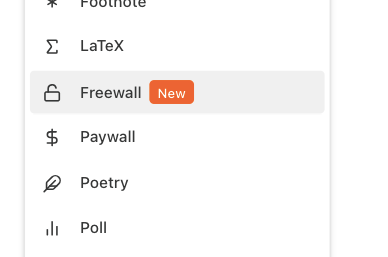
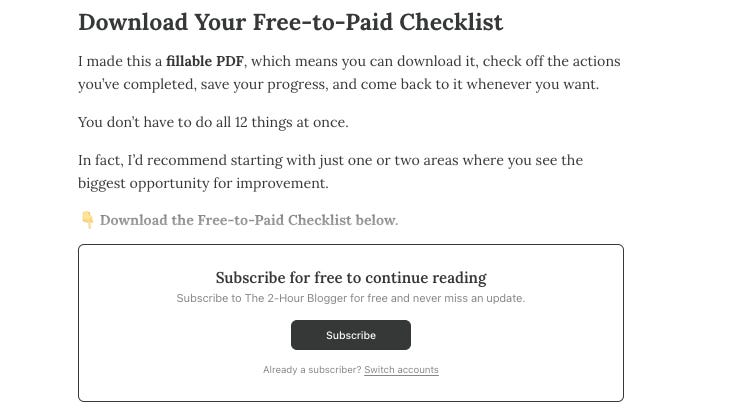
A Freewall lets you show readers a preview of your post before asking them to subscribe for free to continue reading.
Unlike a paywall, you aren’t asking people to pay. You’re giving them a reason to join your publication. And I think there are some interesting ways to use this.
Here’s how it looks like in an article:
What are the benefits of using Substack’s Freewall?
I come from a blogging and email marketing background and only see the benefits. But that’s not the case for everyone, so maybe it’s best to first list these. Hopefully, that makes you look at the feature in a more positive way and actually give it a chance (which will probably lead to some new subscribers for your newsletter).
1. Turn followers into subscribers.
Some people follow you on Substack or read your posts without subscribing. A freewall gives them a reason to finally take that next step.
2. Turn casual readers into loyal readers.
Someone who subscribes can receive your future posts in their inbox, giving you more opportunities to build trust and encourage them to return. That makes them more likely to gain so much value from you that they become a paid subscriber or invest in your products or services.
3. Create a lead magnet without an external landing page.
Use a freewalled post to introduce a resource and deliver it to free subscribers. You may not need a separate opt-in form or email marketing tool for that.
4. Build a funnel for your paid tier.
Attract readers with useful free content, build trust through your emails, and introduce your paid subscription when it makes sense.
5. Give readers a taste of your expertise.
Share part of a tutorial or guide, then let subscribers access the rest. This helps potential subscribers understand the value of your work.
6. Test which topics attract subscribers.
Experiment with freewalls on different types of posts. Track which topics seem to bring in the most subscribers and use those insights to guide your content strategy.
7. Convert social media followers into subscribers.
If you share an article link on X or LinkedIn, for example, readers can preview the content before subscribing to continue. This gives interested followers a clear next step. They still need to opt in, though, to actually be on your list.
And now, here are some great ways to actually use the freewall to grow your audience:

5 Ways to Grow Your Email List Using The Freewall
1. Give away the problem, then share the solution.
One of the easiest ways to use a freewall is to introduce a problem your audience relates to.
Explain why it matters and share what you’ve learned. Then place the freewall before the practical solution.
For example, if you’re writing about gardening, explain why someone’s indoor plants might keep dying despite regular watering and sunlight. Describe how frustrating it is to watch them struggle, even when you’re trying your best. Then place the freewall before revealing the three common causes and how to fix each one.
This works well because readers already understand the value of the post. They’re more likely to subscribe when they want to know what comes next.
2. Deliver a freebie to new subscribers.
That’s the main reason why I’m happy about this new feature. We can finally deliver freebies in a convenient way.
A freebie, also known as a lead magnet in email marketing, is a bonus you give people for sharing their email address with you and joining your email list. it’s often a checklist, guide, template, or another resource.
And now, you can simply publish a new post, share the introduction to the freebie, and put the actual resource behind the freewall so readers subscribe to access it.
3. Share the first few tips in a listicle.
I think listicles (list articles) are perfect for experimenting with freewalls.
For example, if you’re writing about 10 ways to make your home feel cozier, share the introduction and the first few tips with everyone.
Place the freewall before the final tips. This gives non-subscribers a taste of your advice without revealing the entire article.
Just make sure the free preview delivers genuine value. You want readers to subscribe because they like what you’ve shared, not because you’ve kept everything useful behind a wall.
Also try this with tutorials, resource lists, mistakes to avoid, growth strategies, and practical guides.

4. Turn your best articles into subscriber magnets.
You don’t always have to create something new to experiment with this feature. I’m a big fan of updating old content and making the most of what’s already in your Substack archive.
So find the articles that got the most views, likes, comments and restacks.
Which ones solve a problem your ideal subscriber has? These are good candidates for a freewall.
You can even experiment with articles that already bring readers from Google.
Someone discovering your publication through a search engine might love your advice but leave without subscribing. A freewall gives them an actual reason to join before continuing to read.
5. Experiment with different freewall positions.
One thing worth testing is where you place the freewall. In fact, I believe that can change how many readers subscribe.
Put it too early, and readers might not understand why your publication is worth joining.
Put it too late, and they might get everything they need before reaching the subscription prompt.
There’s probably no perfect position, either. It depends on your topic, writing style, and audience. And you will find what works for your publication after testing the freewall for some time.
But here are some ideas for its positions. It can be after:
A strong introduction and the first useful takeaway;
A few tips in a longer listicle;
The background of a personal story;
An explanation of a problem, before the practical solution;
A short tutorial, before the more detailed instructions.
Then compare the results over time. Look at how many readers visit the post and whether your subscriber growth changes.
And please don’t judge the experiment based on one article alone. Try more posts before deciding what works best for your audience.
How to Add a Freewall
It’s very simple.
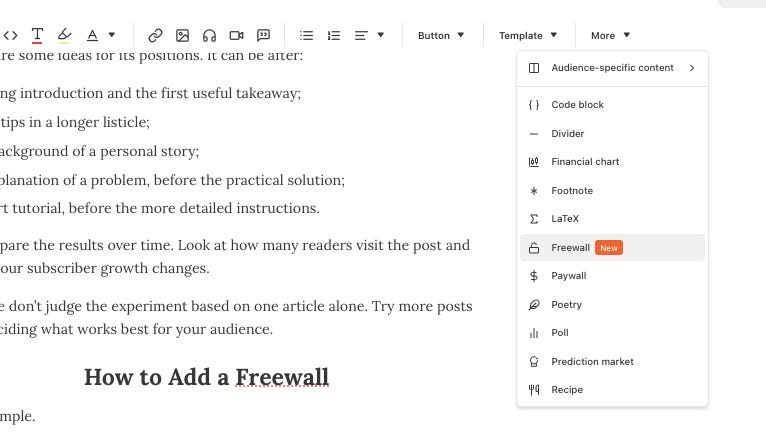
Once you’re editing a post, click More and you’ll find the Freewall option there.
Insert it anywhere you want.
So, will you use it?
I’m excited about this feature because it’s another opportunity to turn readers into subscribers.
But that doesn’t mean I’ll start adding freewalls to every post, or go back and lock all old articles.
I’ll do it when it feels right, and there will be still plenty of value around here for those of you who just don’t want to get anything in their inbox but prefer to follow updates on the platform.
And remember, we’re doing all this to attract readers who genuinely want more of our content, of our work, of our energy into their life. Who want to learn from us, get inspired by us, or just follow our journey.
So this isn’t just to get more email addresses and increase your metrics. There’s always a bigger mission. Your intention matters, and good businesses are built with good intentions.
Want to put this into practice?
Knowing how Substack’s Freewall works is one thing. Knowing exactly how to use it in your own publication is another.
That’s why I created The Freewall Planner, a practical PDF to help you turn existing Substack posts into subscriber magnets.
Inside, you’ll find:
A checklist to choose the right post from your archive
Five ideas for where to place your freewall
A preview checklist to make readers want to continue
A simple strategy for delivering free resources
A tracker to test three posts and learn what works
It’s designed to help you take action without starting from scratch.
The Freewall Planner is available to paid subscribers of The 2-Hour Blogger.
Upgrade and you’ll get immediate access below: