



This is an interview with Sweta Sharma of Breakout Insights.
At a glance:
Current subscriber count: 1,100
Most successful post: How to actually make money writing (From someone who’s done it)
Most underrated growth tactic: Posting consistently through notes + articles
Favorite Substack feature: Notes
One creator everyone should follow: Linda Caroll
One tool you can’t live without: Notion
Key metric to track: Real conversations
Main revenue source: Ghostwriting
One sentence describing your newsletter: Helping you break free from the 9-to-5 and build something of your own.
One piece of advice for new writers: Do NOT compare your day 1 to someone’s day 1000.
The Beginning
Tell us about your publication. What are you building on Substack, and who is it for?
Breakout Insights, as the name suggests, is a space to help people break free from the mental limitations and traditional career paths that keep them stuck and start building something of their own.
If you want to build an audience and turn your skills into opportunities that let you live life on your own terms, then this is the place for you.

You went from a corporate career to building something of your own. What was happening in your life that made you decide to leave your job?
I worked in the corporate sector for almost a decade.
Life was good for the most part. Of course, I faced challenges like tight deadlines, work pressure, and all the usual things that come with being an employee, but nothing that ever made me seriously think about leaving.
Then, in 2023, things started getting worse in my professional life because of a few not-so-great people at work. There was one woman in particular, let’s call her Mambo for privacy, along with a few people from management, who started targeting me. I was constantly put under difficult working conditions, and there was also growing pressure to manage the team and meet unrealistic expectations.
I tried to deal with it for months because leaving a job after almost 10 years is not an easy decision. But one day, Mambo crossed a line that I couldn’t ignore anymore. I also got this intuition that this place was NOT right for me. That day, while leaving for the office, I decided to part ways with the organization forever.
What did the first few months after leaving corporate actually look like?
I’d say they were freeing and confusing at the same time. When I left my job, I wasn’t in my best physical or mental state because of the toxicity and the work pressure I had been handling for over 10 months. I think all of that had piled up over time.
So, I took some time for myself to slow down, process everything, and figure out what I wanted to do next. The first few months were mostly about navigating my way forward and finding my feet again.
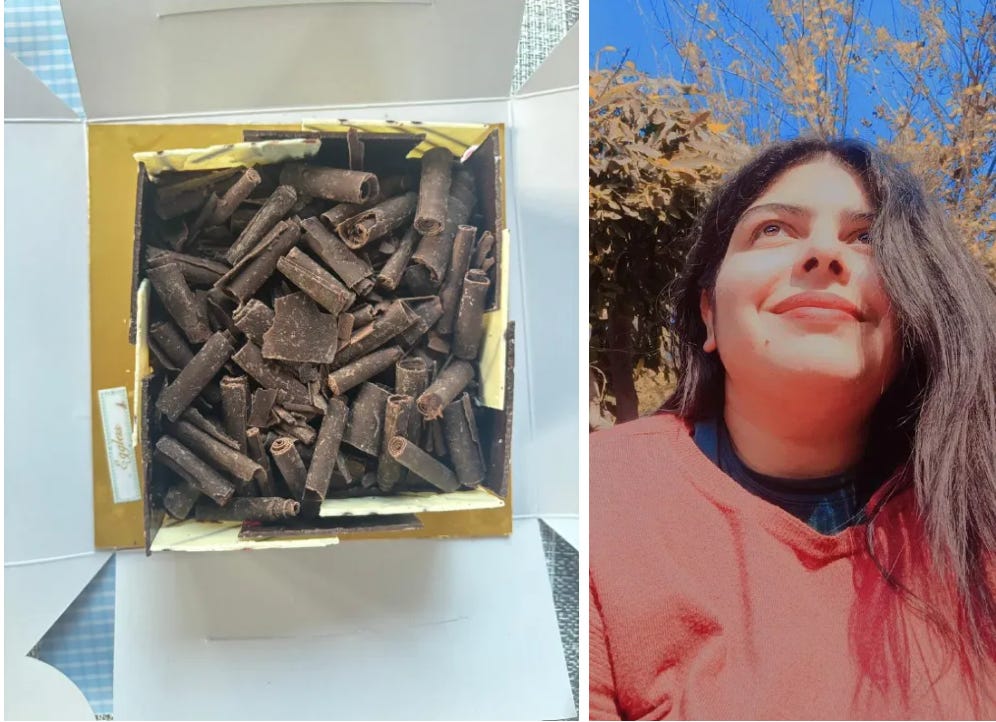
Left to right: The cake I cut on the last day of my notice period, me sitting in the park the next day:)
What was your writing journey before Substack? And what made you start on Substack in the first place?
I used to write on Medium. It was the only writing platform I used, whether I was writing short-form or long-form content.
Substack came onto my radar when Kristina God, a writer I followed on Medium, pivoted to Substack and started doing really well there. I also liked the whole vibe of the platform, and that’s when I decided to give it a shot.
The Pinterest Story
You’ve generated 75+ million organic impressions on Pinterest. What do you think were the biggest factors behind that growth?
Volume! I’ve posted over 12,000 pins over 2 years. I did the designing, the research, and the real-time posting, and that consistency gave my profile enough momentum to keep growing over time.
I also spent a lot of time understanding the platform’s fabric and nuances, then kept applying what I learned to my content strategy.
What did you do differently on Pinterest once you moved beyond the beginner stage?
I started paying a lot more attention to SEO, which I wasn’t doing much as a beginner.
What does your Pinterest strategy look like today?
Nowadays, I basically repurpose the blog posts I write on Substack into Pinterest content. I usually pick one specific blog post, break it down into different ideas and angles, and then come up with multiple pin titles that can lead people back to that article.
From there, I create different pin designs around those titles. I also pay attention to Pinterest SEO, so the titles and the way I package the content are based on what people are likely to search for, not just what sounds good to me.
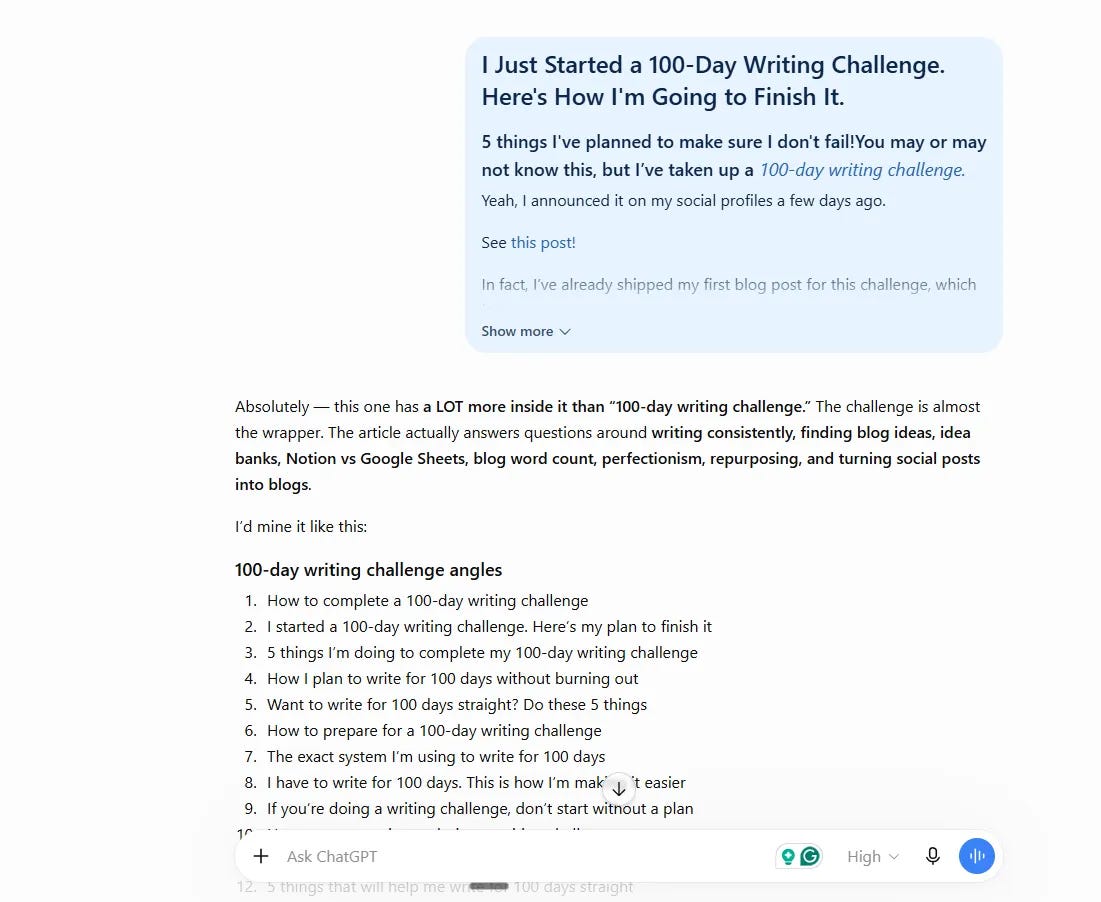
My process has also become much more tool-heavy than it used to be. Earlier, I was doing almost everything manually, but now my stack includes Ideogram, Gemini, and ChatGPT, to name a few. I use them at different stages for design, research, and speeding up parts of the workflow while still making the final decisions myself.
For someone starting Pinterest today, what would you tell them to focus on first?
Optimize your profile first, and make sure you’re choosing a niche that has demand on Pinterest.
Not every niche on Pinterest gets the same kind of traction, so before you start posting heavily, spend some time understanding whether people are searching for the kind of content you want to create.
The better you understand how Pinterest works for your niche, the easier it becomes to create content with some direction.
What mistakes did you make with Pinterest early on that you would avoid today?
There were many! I didn’t pay enough attention to visual and text hierarchy, and I used to hoard keywords instead of using them naturally. I also didn’t put much effort into optimizing my pins and boards, even though they play such an important role in discoverability.
Another big mistake was creating and posting things because I wanted to, without checking whether people were searching for that topic on Pinterest.
How can writers use Pinterest to grow a Substack publication?
Writers have a huge opportunity to use Pinterest to grow their Substack because it can bring organic traffic to your publication, plus the content you publish there has a much longer shelf life. Meaning, if you publish a pin today and it starts performing well, you can keep getting traffic from it for months, sometimes even years.
You can take a similar approach to the one I follow. Pick one of your blog posts and start creating multiple pins around it. If you’re a beginner, I’d suggest posting at least 10–20 pins a day. Also, create 5–7 relevant boards on your profile around the topics you regularly write about.
Note: Learning the basics of Pinterest SEO and visual hierarchy is a must!
What types of Substack content do you think translate particularly well to Pinterest?
I’ve only recently started linking my Pinterest pins directly to my Substack, so I’m still observing what performs best. Initially, I was thinking of creating my own blog and claiming that website on Pinterest, but I’m still figuring out that direction and may change my mind later.
Based on the analytics I have so far, I can already see growing interest around topics like online or freelance writing, AI, and creating income online. So, if you write around these topics on Substack, there is definitely potential to repurpose it for Pinterest.
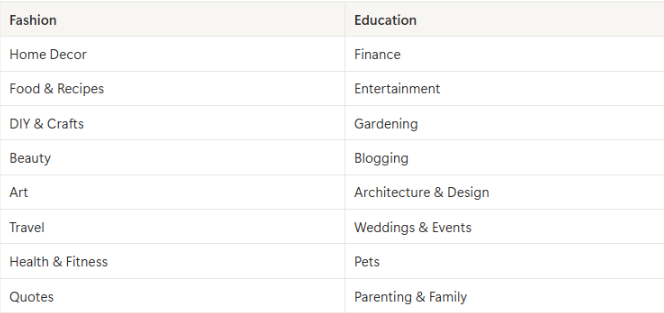
But even if your content doesn’t strictly fall into these categories, you can still explore Pinterest. You can refer to this list of popular Pinterest niches to see where your content might fit.
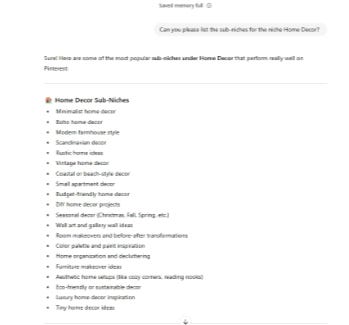
You can also use LLMs like ChatGPT, Claude, or Gemini to dive deep into the sub-categories for each niche. Example:
How important is Pinterest SEO compared with creating visually appealing pins?
I’d say they are equally important. No matter how visually appealing your pins are, if you’re not optimizing the pin title and description, adding them to relevant boards, or using the right keywords, they may not get discovered in the first place.
On the other hand, if you only focus on SEO and create poorly designed pins, people may see them but not feel compelled to click. So, you really need to pay attention to both.
The Growth Story
What did your first few months on Substack look like?
I created my Substack profile in August 2024, and this was my first-ever Substack post. Yes, I still cringe a little when I look at it, but I think it happens to all of us at some point.
After that, I didn’t pay much attention to Substack for more than a year. To be honest, I don’t even remember my subscriber count or what my expectations were during those initial months because Substack wasn’t really a priority for me then. I mostly repurposed my Medium articles there and published without much strategy.
It wasn’t until May 19, 2026, that I decided to take Substack seriously and started being much more intentional about what I was publishing and how often I was showing up here.

What were the biggest growth drivers?
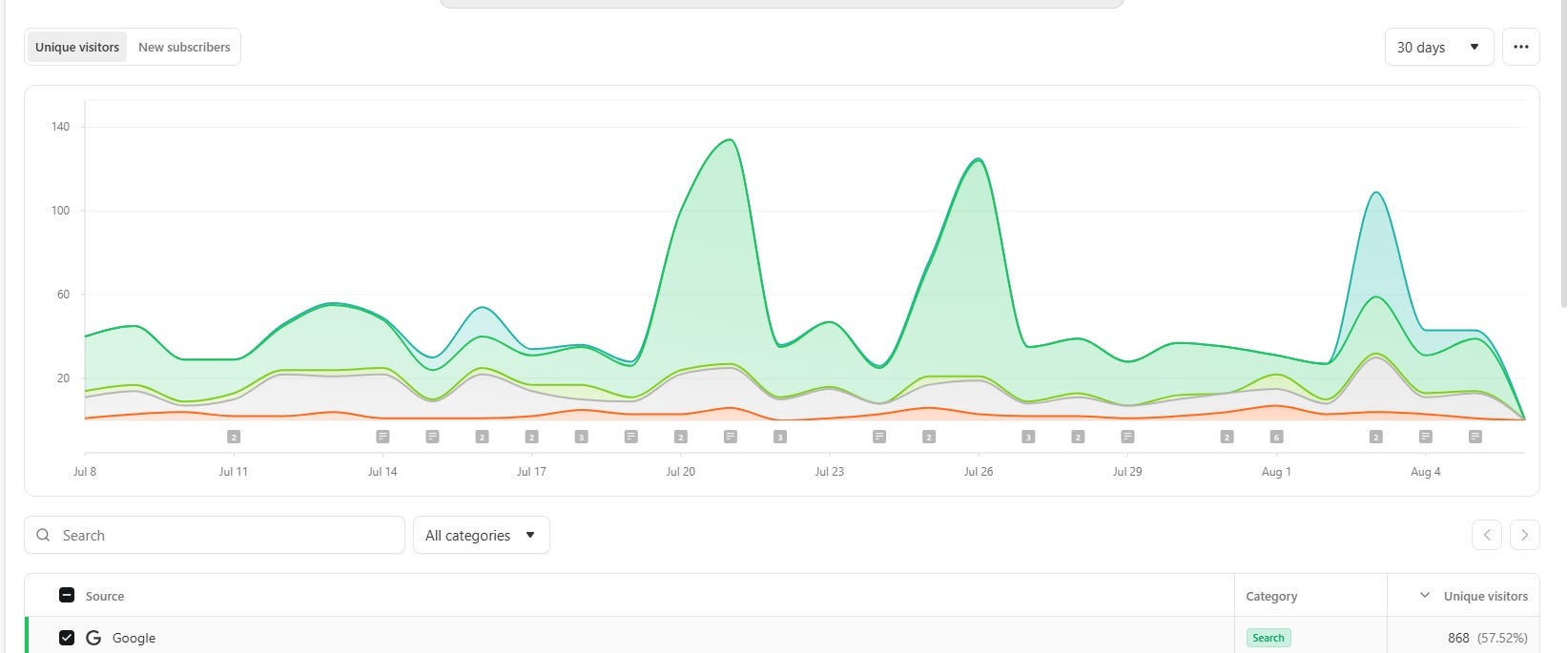
The biggest growth drivers for me are surely organic search from Google and LinkedIn.
What’s one thing that worked much better than you expected?
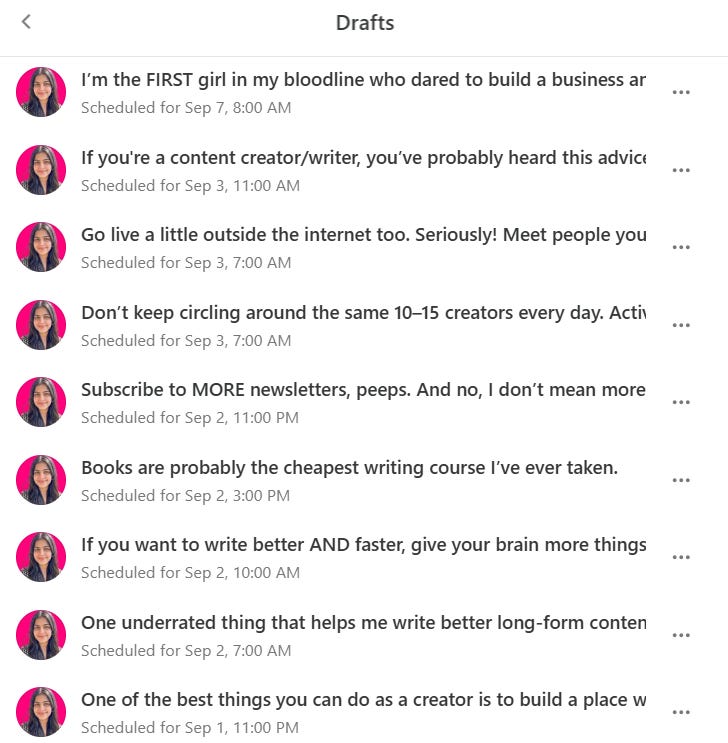
Notes, for sure. When I first started posting them, I thought people exaggerated how useful they were. But now I can vouch for the fact that notes really do help with discoverability and connecting with new people.
In fact, I’ve intentionally increased the frequency of my daily notes to see how much of a difference they can make in my publication’s growth.
Which channel currently brings you the best-quality Substack subscribers?
The LinkedIn Growth Story
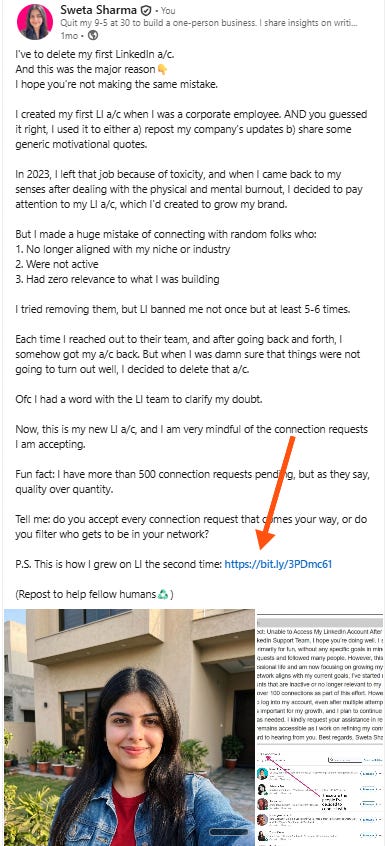
You’ve grown to 8K followers on LinkedIn, but this wasn’t your first time building an audience there. Why did you delete your previous account with 7K+ followers?
I created my first-ever LinkedIn account when I was still an employee. At the time, I had no intention of building a personal brand or using LinkedIn the way I do today. Since I worked in the publishing industry, I mostly connected with authors, publishers, designers, and others in the same space, without paying attention to whether they actively created content.
When I left my job and started figuring out what I wanted to do next, I decided to use LinkedIn more seriously to grow my personal brand. I remember seeing an Indian creator hit 1,000 followers on LinkedIn and, for some reason, that sparked an idea in my head. I started posting consistently and did that for months.
But after a while, I realized my content wasn’t getting the traction I felt it deserved. I thought about different possible reasons, and one of them was that my existing network probably wasn’t aligned with the kind of content I was now creating.
So, I started removing connections that were no longer relevant. That’s when LinkedIn suspended my account. I reached out to their team, got the account back, tried again, and got suspended again. This went on for months and became really frustrating.
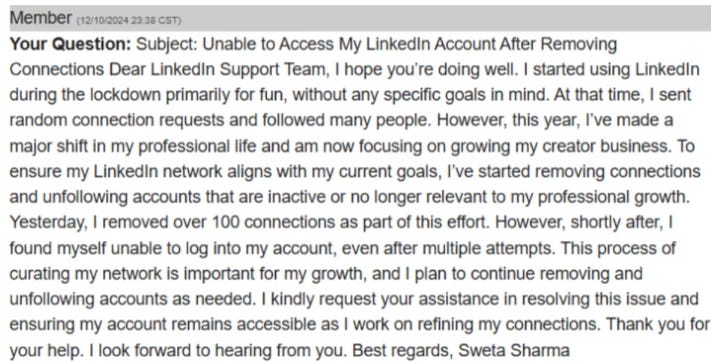
Eventually, I decided to delete the account altogether. It was definitely difficult because I had built that profile from the ground up and had more than 7,000 followers there. I was also worried about identity duplication because I had already verified that account using Aadhaar, a government-issued identity document used in India, so I wasn’t sure whether I could verify a new account with the same document again.
To resolve my query, I spoke again with the LinkedIn team, and when they assured me that I could do that, I finally deleted the old account.
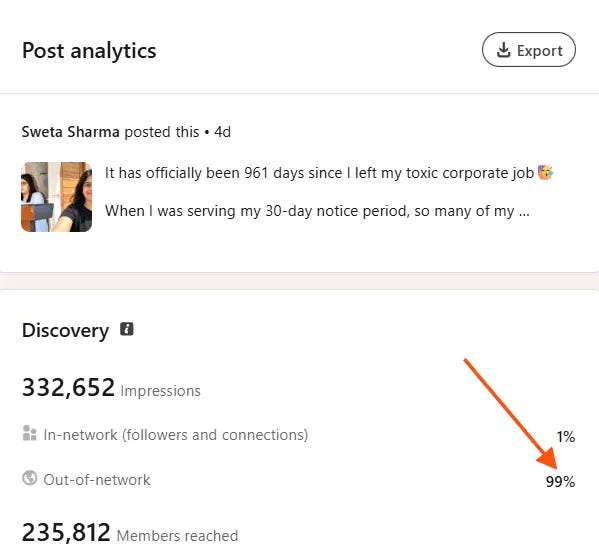
You recently shared that you went viral with 316K impressions and 1,900 new followers in just two days. What actually happened? What do you think made that post take off?
There were three main reasons behind that huge spike.
Reason 1: It was a celebratory post, and LinkedIn tends to push this kind of content beyond your immediate network. I realized this only after checking the analytics and seeing that more than 90% of impressions came from people outside my network.
Reason 2: The image I chose played a big role. It showed a clear transformation, so even before someone read the post, the visual itself was enough to make them stop while scrolling.

Reason 3: The hook and the length of the post worked well together. I added specific numbers in the hook, which made the result feel concrete, and I kept the post short enough that people could consume it quickly without losing interest.
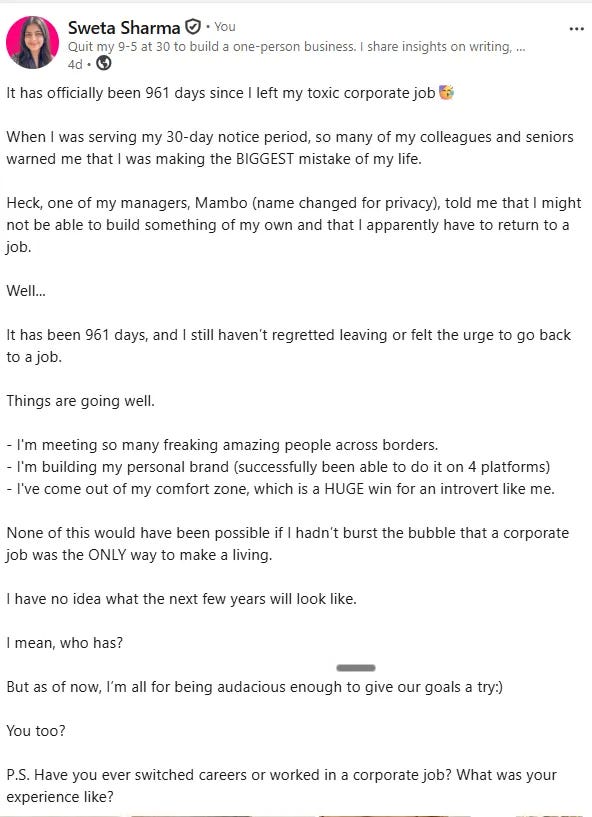
I think all of these things came together at the right time, which is why the post traveled much further than I expected.
What have you learned about creating content that gets shared on LinkedIn?
In my experience, personal posts work really well on LinkedIn, and I’ve seen this happen not only with my own content but with other creators too. So, no matter how you think about LinkedIn, I’d still suggest experimenting with personal content from time to time. It makes you more relatable because when you share something you’ve experienced, there is always a chance that someone reading it has gone through something similar. It also brings some freshness to your usual educational or how-to content.
I’ve also learned that images can play a huge role in how a post performs. My best-performing content format is text + image. Try the same format and see how it works for you.
What’s one LinkedIn growth tactic that you think is underrated?
It has to be commenting!
If a writer already has an audience on LinkedIn, what would you recommend they do to start moving those readers onto Substack?
First, add your newsletter or lead magnet link to the Featured section on LinkedIn so people can easily find it when they visit your profile.
Then, start creating LinkedIn posts that are variations of the ideas you already cover in your newsletter. You don’t have to copy the entire post. Share enough to make the LinkedIn post useful on its own, and then add a CTA that directs interested readers to your Substack if they want to read the full piece.
How do you decide what belongs on LinkedIn versus what deserves a deeper dive on Substack?
I haven’t cracked a fixed formula for this. A lot of it comes down to instinct, and I think that instinct has developed because I’ve already shipped hundreds of posts on LinkedIn.
I also don’t have a strict rule for what gets published on LinkedIn versus Substack. Sometimes I publish an idea on LinkedIn first (like this), and if I feel there is more to say, I expand it into a deeper Substack post (like this). Other times, I write the Substack piece first and then pull out one angle from it for LinkedIn.
So, I’d say I mostly let the idea decide the format instead of forcing every topic into a fixed system.
Behind The Scenes
What role does Substack play in your overall business ecosystem?
As I mentioned, I’ve only recently started taking Substack seriously, so I still see it as something I’m building rather than something I’ve completely figured out. But I’m damn sure that this platform is going to become one of the main pillars of my business. I’m already working on directing more of my traffic here and translating that attention into subscribers, opportunities, and revenue.
What are your current revenue streams?
Right now, my revenue comes from ghostwriting and digital products, and I’m also about to start offering my own services business.
What metrics do you actually pay attention to across your platforms?
I don’t pay equal attention to every metric because what matters to me changes by platform.
On Pinterest, I mostly look at saves and outbound clicks.
On LinkedIn, I pay attention to profile visits, DMs, saves, and comments.
On Substack, I mainly look at subscribers and comments.
On Medium, comments & followers are one of the main metrics I notice.
What’s Next
What’s your goal for the next 12 months?
I’m definitely going all in on LinkedIn and Substack. Pinterest and Medium will mostly become repurposing channels for the content I’m already creating on these two platforms.
This month, I’m also planning to start experimenting with X. I’ve heard and seen enough about the platform to finally give it a proper shot, and since it’s text-based, I already have a huge library of content that I can repurpose and adapt there. Of course, I know I’ll have to give it time before judging whether it works for me, but I’m curious to see how it goes.
Apart from growing these platforms, I’ll also be focusing more on building the business side of things. I’m working on my cohorts and services around personal branding, including profile revamps, audits, and strategy. So, the next phase for me is about connecting the audience I’ve been building with the services and offers I want to create.
If someone is sitting in a corporate job today dreaming about becoming a creator, what would you tell them?
Do NOT leave your job to become a creator. Use your salary to fund your learning while you start creating on the side.
Choose a social platform and a content format that you enjoy and feel comfortable with. It could be writing, video, or audio, but make sure it feels natural to you. If you’re constantly trying to mimic what everyone else is doing just because it seems to be working for them, you’ll probably get exhausted and give up much sooner.
Also give yourself at least 3–6 months before even thinking about quitting the content thing!
Learn from as many people as you can, but don’t blindly follow one creator or one piece of advice. Consume different perspectives, use your own brain to decide what makes sense for you, test those ideas, and then double down on whatever starts working.
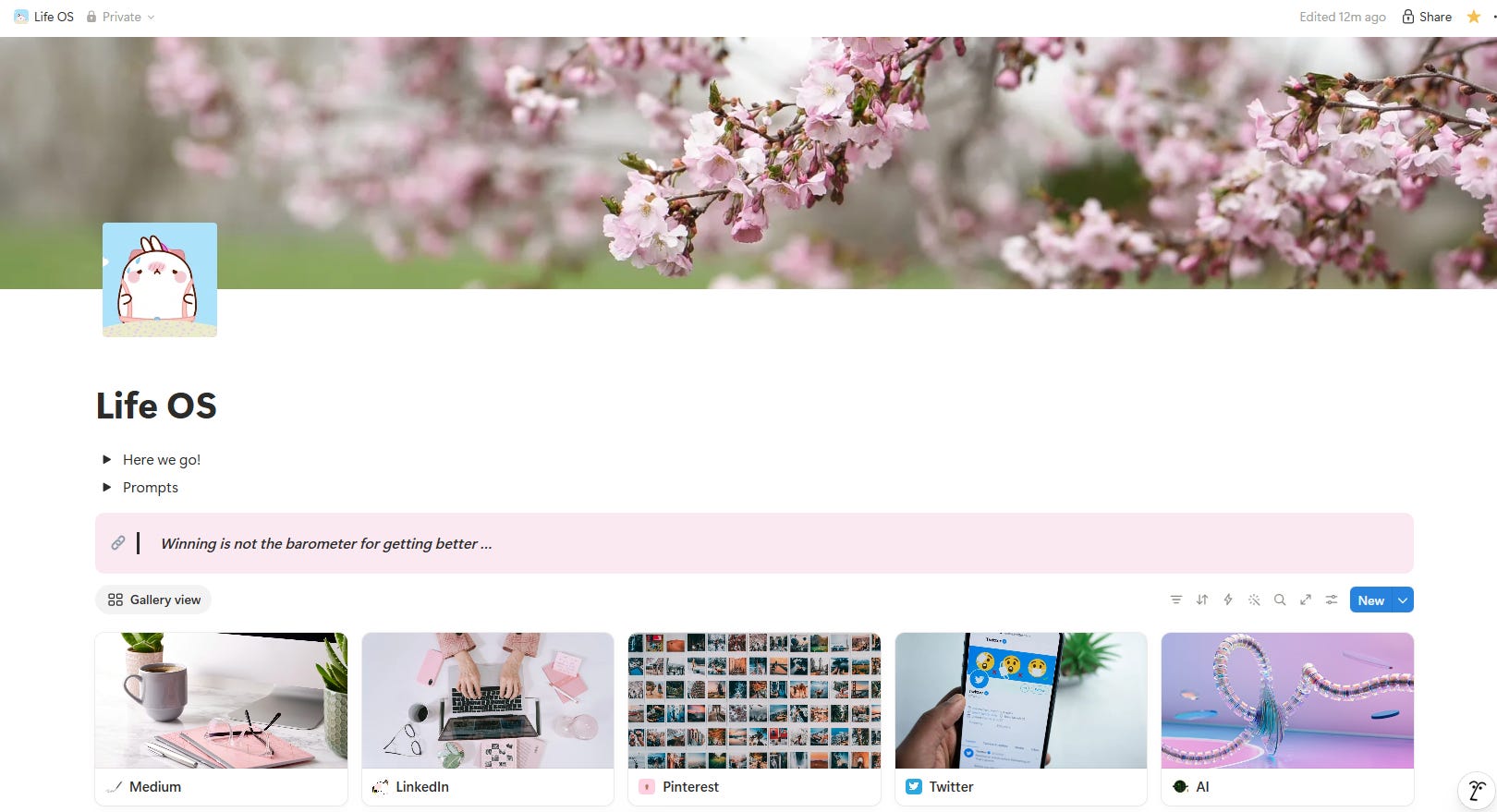
Also, document what you’re creating. I use Notion for this.
And finally: if you had to start over today with zero followers, zero subscribers, and no audience, what would you do first?
I would first learn the fundamentals of whatever social platform I choose. I’d watch videos, read as much as I can, and also use research tools like ChatGPT.
Based on what I learn, I’d create and optimize my profile and then start shipping content without worrying too much about whether everything looks perfect or polished.
Then, I’d aim to publish at least 100 pieces of content, ideally more, because I think you need that much volume to understand what gets traction. Once I have enough data, I’d review the analytics, see which ideas or formats are performing better, and double down on those.
Along with creating content, I’d also actively network with other creators through comments and DMs.
Lidiya, this was such a good interview. 👏🏾
Sweta’s point about not comparing your day 1 to someone else’s day 1000 really hit for me.
I’m also a big believer in the “ship 100 things, study the data, then double down” approach. You don’t always need a better strategy—you need enough reps to actually see what’s working.
And the Pinterest story is wild. 12,000+ pins and 75M+ organic impressions is a masterclass in what consistency + understanding the platform can compound into.
Great conversation and a lot of practical takeaways here. 🤝🏾
Love learning more about Pinterest and LinkedIn!